
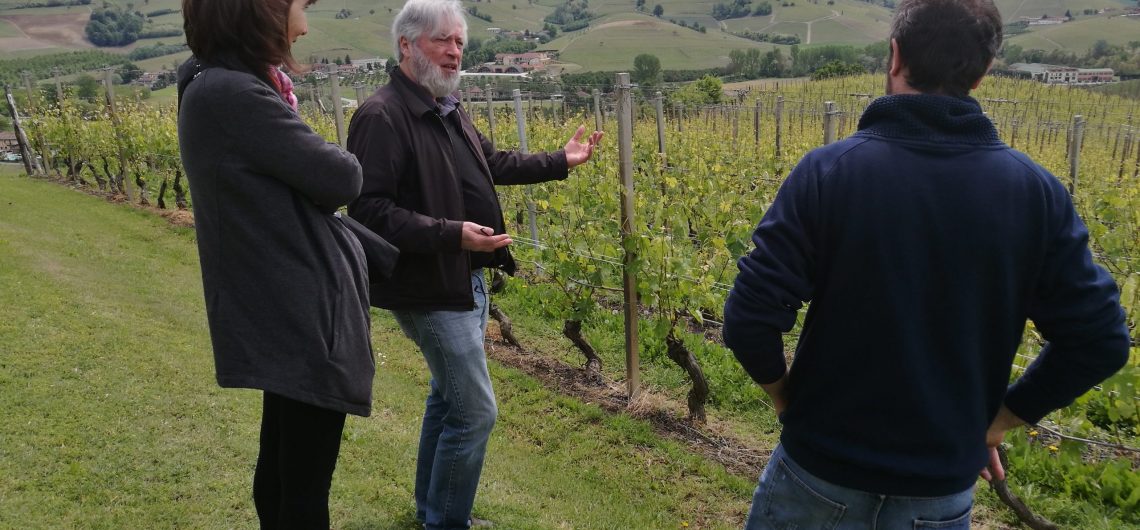
Does SlowDays speak “Piemunteis”? It certainly does. We chose the name SlowDays because we want to be international, but we were born in the wonderful region of Piedmont. So we speak English, French and German—with a few Piedmontese expressions thrown in, because we love remembering our roots!
PIEDMONTESE DIALECT: OLD WORDS AND SAYINGS THAT HAVE NEVER BEEN FORGOTTEN!
We decided to dedicate a post to our colourful and expressive dialect. In many wineries you will still meet people who use Piedmontese phrases, sometimes mixed with English. In some Langhe trattorias you may hear older people—and younger ones too—chatting animatedly in Piedmontese, so understanding a few expressions can be useful and fun.
For many of us, Piedmontese evokes childhood. Hearing just a few words brings back memories of our grandparents, their lively conversations around the Sunday lunch table and the madamin chatting outside the village church after Mass.
For me, it recalls a time when we still spoke it at home because “all our relatives speak that way”. Sadly, it is heard less often in everyday life and is said to be gradually disappearing. Younger generations rarely speak Piedmontese, and family conversations are no longer commonly held in dialect. Yet all is not lost. Numerous associations in Piedmont and elsewhere work to preserve both spoken and written Piedmontese. Schools are also beginning to include the dialect in their annual teaching programmes. Some nursery schools in Santhià, for example, devote an hour a week to learning the basics of the dialect and Piedmontese traditions with specialist teachers. Quite remarkable, don’t you think?
Piedmontese is not really a single dialect. Alba has intonations, words and expressions that can be very different from those heard in Bra, Turin or the Alta Langa. The Turin dialect is known in the Langhe as speaking “da bin”. The Piedmontese of the Langhe has broader sounds, with an “e” that almost becomes an “a”, while the Turin variety retains a somewhat more refined style.
Despite generational changes and local differences, some parts of our dialect have survived: sayings, proverbs and witty expressions used as conversational fillers, often without us even noticing. These phrases can reveal a great deal about a people and their culture.
Here are some expressions we use every day without thinking. You will hear many of them, because Piedmontese phrases often mingle with Italian.
PROVERBS ABOUT WINE
Ël vin e i segret a peulo nen vive ansema
Wine and secrets cannot live together.
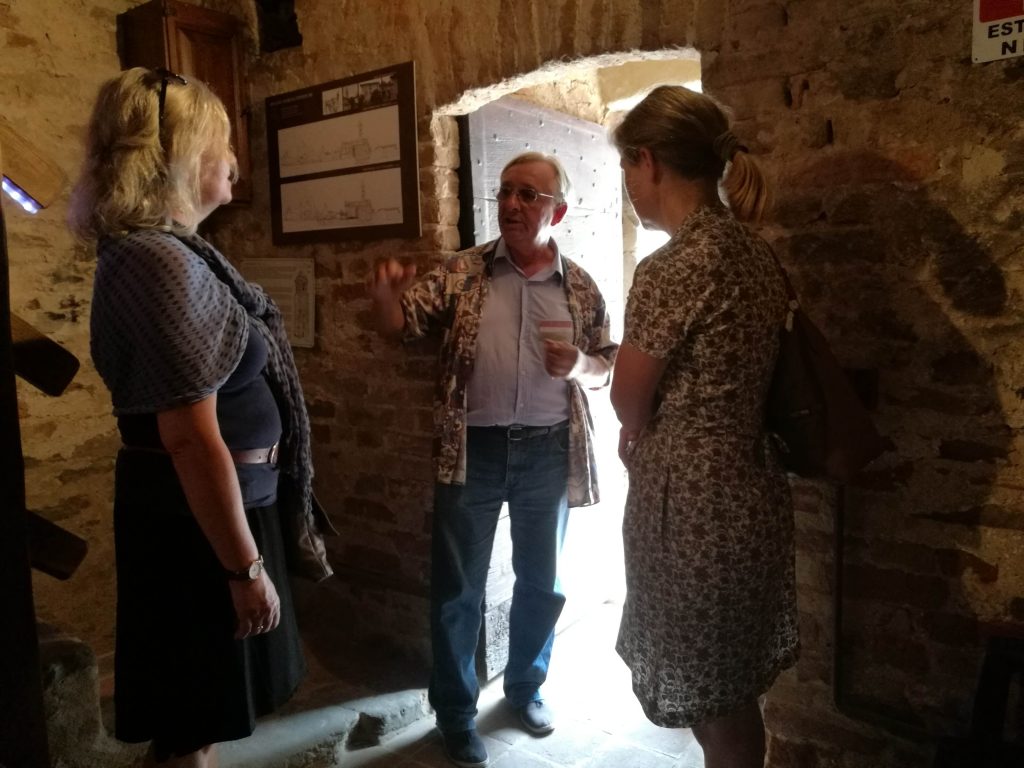
In other words, “in vino veritas”. Do not drink too much if you want to keep your secrets!
S’a l’é nen ëstàit bon vin a sarà nen bon asil
If it was not good wine, it will not make good vinegar.
When something begins badly, it is unlikely to end well.
Andôva j regna ‘l vin a-j regna nen el silensi
Where wine reigns, silence does not.
Wine helps create atmosphere—and conversation!
A chi a-j pias nen al vin, Nôsgnôr a-j fasa manchè l’aqua
May the Lord deny water to those who do not like wine.
A little severe perhaps, but it says a great deal about the importance of wine in Piedmont!
EVERYDAY PHRASES AND PIEDMONTESE EXPRESSIONS
Cum al’è? – How are things?
Fuma ch’anduma? – Shall we go?
Va bin – All right.
Mac pi… – Only … left.
Parla pà! – Goodness!
Ch’a staga bin – Take care.
Ciama n’autr – Goodness!
Dabon? – Really?
Sta ciuto! – Be quiet!
Che sagrin! – What a shame!
Lasa mach perdi! – Leave it alone!
Sarà meij! – It had better be!
PIEDMONTESE SAYINGS USED IN ORDINARY CONVERSATION
Fé sapin – the face children pull just before they begin to cry. 
A me batu le brëcheutte! – literally “my pots are rattling”, said when you are freezing.
Scaudum-se mach col vin brulé, va! – Let’s warm ourselves up with mulled wine!
Esse al pian dij babi – to feel downhearted (literally, to be at toad level).
Ciaparat – a braggart or bungler (literally, a rat catcher).
Andé a rabél – to go to ruin.
AND THEN THE UNMISSABLE PIEDMONTESE EXCLAMATIONS!
Piantla lì! – Stop it!
Gavte la nata! – Wise up! (literally, take off your cork.)
Ma t’ses fòl? – Are you crazy?
Balengu! – A colourful way of calling someone silly!
Boia fauss che lembu! – Goodness, what a fall!
Then there are the Italian “Piedmontisms”, which are another story altogether. These are not Piedmontese expressions, but literal translations into Italian.
You might hear someone say that they are going to the “comber” instead of the hairdresser, or use the very Piedmontese roundabout construction “Let’s do that we go to the hairdresser”.
Another amusing example is “I don’t dare myself”, making the verb “to dare” reflexive. And then there is the conversational nèh!, repeated and bounced back and forth through questions and answers.
These and many other expressions make the Piedmontese—apparently reserved and reluctant to become familiar—so likeable. In reality, they love sharing their land and products and are proud to show them to anyone curious enough to listen.
We hope we have made you smile. I certainly enjoyed thinking about how many Piedmontese words we use every day!
Come and join me for an excursion in Piedmont, nèh! Perhaps while cycling…
Or enjoy a traditional merenda sinoira, tasting wines and discovering the ancestor of today’s apericena.
If you are curious and would like to learn more about the Piedmontese language, here is a useful website.
Comments