Piedmont: the guide created for you
Did you know? More and more travellers are currently choosing Piedmont as an authentic destination for a holiday in Italy. If you are one of them, this guide is the perfect starting point for discovering what to see, eat and experience in our beautiful region!

An introduction to Piedmont: even its name tells you a great deal!
Piemonte means “at the foot of the mountains.” The name originated in the Middle Ages as Pedemontis. At that time, it did not identify a distinct region but described the flat lands stretching out at the foot of the mountains. The people living in these areas were the Ligurians, a Celtic tribe. Over time, the division between Piedmont and Liguria was shaped by the natural barrier formed by the Alps and the Apennines. The Ligurian hinterland acts as a buffer between Piedmont and the Ligurian Sea.
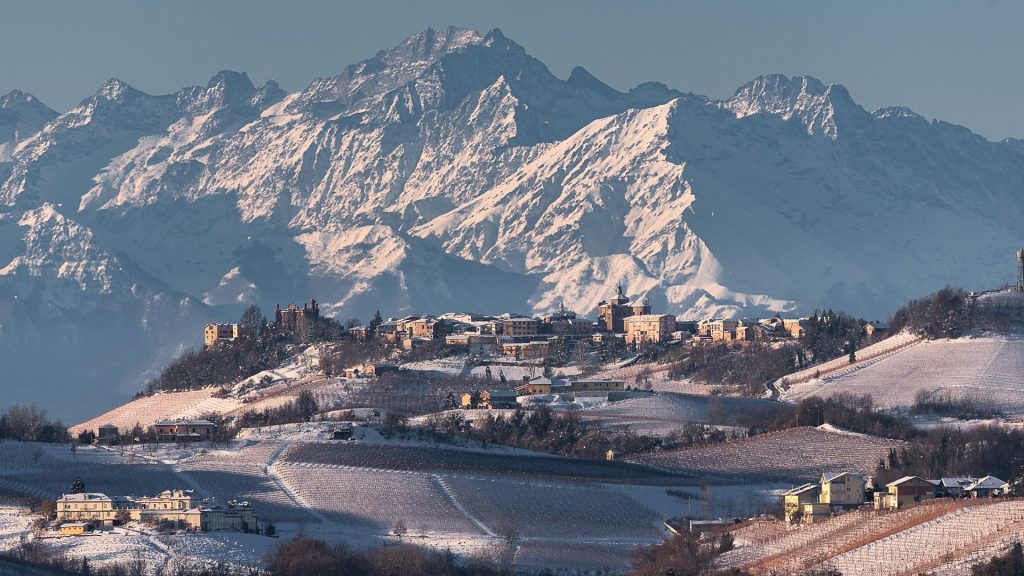
Mountains dominate Piedmont’s physical landscape: 48% of the region is mountainous. Next come the broad plains, led by the Po Valley, followed by a hilly area covering around 20% of the territory.
The main geographical areas are:
- the Cottian, Ligurian, Graian and Lepontine Alps
- the pre-Alpine lake district, whose largest and best-known lake is Lake Maggiore
- the plains, home to the region’s important rice-growing district
- the famous Piedmont hills of Langhe-Roero and Monferrato, now a UNESCO World Heritage Site
With such geographical variety, it is easy to imagine a diverse holiday suitable for travellers of every age, including families.

Piedmont was once covered by the sea
When we look at the Po Valley in Piedmont, we notice a very unusual feature. There is an almost abrupt transition between the plain and the Alps. Unlike Lombardy and Veneto, we do not see the mountain ranges gradually soften into lower mountains known as the Pre-Alps. This difference is connected to the fact that the Gulf of Liguria once extended much farther inland, with the shoreline reaching deep into the region. Traces of this ancient “beach” can still be seen clearly in the Rocche del Roero and in the many fossils that continue to be found today. The probable cause was a major uplift of the seabed combined with the opposite sinking of central Piedmont. It must have been an extremely long geological process and is thought to have occurred around fifteen million years ago.
Archaeological finds in Piedmont
Archaeological discoveries in Piedmont reveal the presence of different cultures throughout history. The region has been inhabited since ancient times, and finds have been uncovered from several periods, ranging from the Bronze Age to Roman times.
The archaeological artefacts discovered in Piedmont are preserved in several regional museums, including the Regional Archaeological Museum in Turin and the Archaeological Museum in Asti. Many remains can also be seen within the landscape itself. One interesting example is the series of arches belonging to the Roman aqueduct just outside Acqui Terme. The aqueduct route extends for approximately 12 kilometres and dates back to the first century AD. A remarkable reminder of the past.
Where is Piedmont? Its borders
Piedmont, Italy: the map explained
Piedmont borders Switzerland and the Aosta Valley to the north. To the south, beyond the Apennines, lies Liguria. To the west, with the Alps forming a natural boundary, is France, whose influence can also be heard in the accents of the Piedmontese dialect. Piedmont borders Lombardy to the east, an important partner for industry and the economy.
For Piedmontese people, the sea is “an idea like any other,” as Paolo Conte says in his song dedicated to Genoa. However, people living in southern Piedmont can reach the beach in around an hour and a half. At the same time, they can enjoy an Alpine arc offering skiing in winter and refreshing mountain escapes in summer.
Piedmont covers approximately 25,300 square kilometres and has a population of almost 4.5 million people. It is the second-largest region in Italy, after Sicily.
How to reach Piedmont
Piedmont has two airports: Turin Airport at Caselle and Cuneo Airport at Levaldigi. They mainly serve domestic routes, together with some connections to European capitals. The main international gateway is Milan Malpensa Airport. From Malpensa, you can rent a car and reach Piedmont using the convenient motorway network, or travel by train via Milan, where there are hourly connections to Turin and the region’s provincial capitals.

Piedmont: geological features
From mountains to green valleys: the geography of Piedmont
As already mentioned, Piedmont lies in the north-western part of Italy. It is the country’s second-largest region by area.
Mountains: Monte Rosa, 4,634 metres; Gran Paradiso, 4,061 metres.
Rivers: the Po, Italy’s longest river, rises here. Important tributaries include the Tanaro and the Dora Baltea.
Cities: Turin, the regional capital, has around one and a half million inhabitants in its wider urban area and is Italy’s fourth-largest city. Novara is Piedmont’s second-largest city by population. The other cities, including the provincial capitals, have fewer than 100,000 inhabitants.
Industries: first and foremost the automotive industry, although no longer enjoying the splendour of the past. Food production is also important, particularly Ferrero in Alba. Textiles play a smaller role, while tourism is expanding rapidly—although it is, of course, a very particular kind of industry.
For further information, I recommend visiting the official Piedmont Region website.

Piedmont destinations: the mountains
The Alps cover 48% of Piedmont and are therefore an extremely important resource, both economically and for tourism. Over the years, the depopulation of some valleys has been accompanied by a completely opposite trend: many young people have returned to family homes and mountain huts, starting businesses connected with the local area.
A particularly meaningful example is the Maira Valley consortium. By creating a network among local businesses and organisations, it has developed a well-managed destination that attracts increasing numbers of visitors every year—all without relying on downhill skiing. Let me share a secret with you, or rather a fascinating hidden place: Elva in the Maira Valley.
Downhill skiing is a different matter. Around Mondovì lies the beautiful Mondolè ski area, which includes Prato Nevoso, Artesina and Frabosa, offering excellent connections and a good range of accommodation.
Much better known internationally is the Sestriere ski area. Thanks to the 2006 Winter Olympics, Sestriere and the nearby Bardonecchia area together offer more than 500 kilometres of slopes and every kind of hotel accommodation.
Mountain holidays are becoming increasingly popular in summer as well. Families, groups of friends and couples come here to recharge after months spent in crowded cities. Piedmont offers a wide variety of options for every requirement, from the most luxurious to the simplest, and also appeals to an international market of mountain enthusiasts in both summer and winter.

Piedmont destinations: welcoming green valleys
I have already mentioned the Maira Valley as a mountain destination, but naturally it also deserves to be included among Piedmont’s valleys. The same is true of the Varaita Valley, the Stura Valley, where large lavender fields bloom in summer, and the Grana Valley, all located in western Piedmont.
The best-known valley, at least because it is home to Italy’s longest river, is the Po Valley and its natural wonders, which are waiting to be discovered.
In northern Piedmont, the Sesia Valley offers extraordinary landscapes and leads towards Monte Rosa. Another important destination is the Susa Valley, the route towards Bardonecchia and Sestriere.
Val Grande National Park is an area of outstanding natural beauty and an ideal destination for nature lovers.
Also in northern Piedmont, close to the French border, are the Lanzo Valleys. This is an important and strategically located holiday area for the province of Turin. Great care is also being taken here to prevent the depopulation of the smaller villages.

Piedmont destinations: the lakes
Piedmont’s lakes are an important tourism resource, even for visitors travelling only a short distance. They offer relief during the summer months and soften the cold of winter. Their peaceful, relaxing environments also provide a safe habitat for many species of wildlife.
Unique for both its beauty and history is Lake Maggiore: Stresa, Intra, Pallanza and the Borromeo family are all part of the story of international tourism, which historically arrived through nearby Switzerland.
Equally unforgettable and moving are walks around Lake Orta and the island of San Giulio, as well as the lakes of Avigliana. A visit to Villa Taranto is also not to be missed.
Water sports can be enjoyed in a truly enchanting setting.

Political map of Piedmont: the provinces

Alessandria
Do not miss a visit to the Citadel of Alessandria, a defensive stronghold built by the House of Savoy in the eighteenth century. The last time I visited, I found it a little neglected, but its fascination remains undeniable. It is one of the most important examples of eighteenth-century military architecture in Italy and among the most significant in Europe. It was built in 1728 during the reign of Victor Amadeus II to protect Alessandria during the War of the Spanish Succession. Its plan is hexagonal, with bastioned fronts. The construction of the Citadel formed part of a vast defensive programme for the Savoy state, which included a system of forts guarding access from the Alps to the plains, such as Fort Bard, controlling the Little and Great St Bernard passes. After Piedmontese troops were defeated during Napoleon Bonaparte’s First Italian Campaign in 1796, both the Citadel and the city of Alessandria came under French rule. In 1867, the Citadel’s prisons held Giuseppe Garibaldi before the Rattazzi government sent him into exile on Caprera. The architectural complex was later used as a military warehouse and has been open to the public since 1990. When visiting the province of Alessandria, do not miss the opportunity to explore this remarkable example of military architecture and important witness to the past.
Acqui Terme, known as “La Bollente,” is also well worth visiting. It is an elegant town with a charmingly old-fashioned atmosphere, and spending a relaxing day at the thermal baths is a particularly enjoyable experience.

Asti
Do not miss the Douja d’Or wine festival or the Palio di Asti. The Festival delle Sagre, celebrating the food and traditions of the local area, is another fascinating event.
A trip to Colle Don Bosco is also highly recommended. It is an impressive place. Known throughout the world, this municipality is called the “Land of Wines and Saints.” Its history dates back to Roman times, as shown by archaeological remains, although the municipality’s official foundation is placed in 1160 under the rule of the Marquises of Turin. Highlights include the Basilica of Don Bosco, the Sanctuary of Saint John Bosco, his birthplace, the Museum of Nineteenth-Century Rural Civilisation and the Don Bosco Missionary Ethnological Museum. The historic centre of Castelnuovo Don Bosco also contains many interesting sites, including the Monument to Saint John Bosco, the deconsecrated Church of the Brotherhood of Saint Bartholomew and the parish church of Saint Andrew the Apostle.

Biella
Make a note in your calendar to visit Burcina Park in May, when the rhododendrons are in bloom.
The Sanctuary of Oropa is an absolute must. It is an interesting destination both for Christian believers and for anyone who appreciates peaceful natural landscapes. Built in the fourth century to spread Christianity in a predominantly pagan area, the sanctuary houses a Gothic statue of the Black Madonna, which has attracted pilgrims for centuries and remains an important pilgrimage destination today. The complex now has more than 300 rooms and includes several buildings: the New Basilica, the Treasure Museum, the Royal Apartments, the Sacred Mount, the Meteorological and Seismic Observatory, and the Library. The surrounding area contains twelve chapels dedicated to the Black Madonna and connected with episodes from her life, including the Chapel of the Annunciation and the Chapel of the Wedding at Cana. The sanctuary can also be reached along multi-day walking routes with accommodation stops and dedicated websites offering organisational support. Today’s pilgrims have a slightly easier journey than those of the past.

Cuneo
The province of Cuneo, known as the “Provincia Granda” because of its size, is an extremely varied area. In addition to the famous Langhe, featured throughout this website, the province offers Alpine landscapes, historic towns and authentic traditions that deserve a visit lasting more than a single day.
One of the unmissable destinations is Saluzzo, a medieval town that seems almost frozen in time. Its cobbled streets, historic buildings and imposing Castiglia offer a journey into the past. Nearby, the fascinating heritage of the Marquisate of Saluzzo is a historical and cultural treasure.
Nature lovers should not miss Monviso Natural Park, dominated by the famous “Stone King,” Monviso. At 3,841 metres, it is one of the most beautiful mountains in the Alps. The Giro del Monviso trail is a unique experience for trekking enthusiasts.
Continuing into the Maritime Alps, we reach the Maritime Alps Natural Park, a paradise for mountain lovers. Alpine lakes such as Lake Valasco and historic mountain huts such as Rifugio Regina Elena are ideal destinations for walks surrounded by nature. In winter, the ski resorts of Limone Piemonte and Prato Nevoso offer slopes for every ability and unforgettable views.
Another lesser-known gem is Chianale, included among the “Most Beautiful Villages in Italy.” Situated in the upper Varaita Valley, this village preserves authentic Alpine architecture and a timeless atmosphere. Casteldelfino and its panoramic trails are also worth visiting in the same valley.
A less famous but equally fascinating destination is Racconigi, with its magnificent Castle of Racconigi, a former Savoy residence and UNESCO World Heritage Site. Surrounded by a large park, the castle is perfect for a day combining art and nature. The Racconigi Stork Centre is another interesting nature attraction and a lovely family excursion.
History enthusiasts should also visit the Albertine Fort of Vinadio, an extraordinary nineteenth-century fortress. In addition to its imposing architecture, it hosts temporary exhibitions and the well-known “Sundial Route.”
Cuneo offers an enormous range of experiences, from culture to nature, making it ideal for travellers looking for an authentic journey full of surprises.

Novara
The province of Novara is extremely varied, alternating between flat landscapes dominated by rice fields, green hills and places of great historical and cultural interest.
The historic centre of Novara, the provincial capital, is worth visiting for its understated charm. The Basilica of San Gaudenzio, with its imposing dome designed by Alessandro Antonelli, architect of Turin’s Mole Antonelliana, is a masterpiece of Neoclassical architecture. Walking through the centre, you will also find the Broletto, a complex of medieval buildings now used for exhibitions and cultural events.
A few kilometres from the city lies Ticino Natural Park, a protected area offering nature trails ideal for walking, cycling and birdwatching. In the same area, the Bellinzago Novarese Natural Monument, a natural wetland, is a gem for enthusiasts of plants and wildlife.
Another unmissable stop is Orta San Giulio, one of the most beautiful historic villages in Italy. Located on the shores of Lake Orta, the town is a small romantic jewel. The Island of San Giulio, reached by a short boat ride, is home to a Benedictine abbey and has a timeless, almost mystical atmosphere.
For castle lovers, Galliate is an interesting option. The fifteenth-century Visconti-Sforza Castle is well preserved and offers a fascinating glimpse into the past.
The rice fields around Novara are another defining feature of the landscape. Visiting in spring, when the fields are flooded, creates a unique spectacle. This is one of the areas where Riso di Baraggia Biellese e Vercellese PDO is produced, an important ingredient in Piedmontese cuisine.
Novara and its province offer continuous discoveries, combining nature, history and gastronomy in a harmonious balance.

Turin
The Church of San Lorenzo, a small treasure beside the Royal Palace.
Porta Palazzo and its market.
The National Cinema Museum inside the Mole Antonelliana. Dedicated to film historian Maria Adriana Prolo, it is one of the world’s most important cinema museums and unique in Italy. Maria Adriana Prolo began the project to create an Italian museum entirely dedicated to cinema in 1941. Following her death in 1992, the museum became a foundation bearing her name and officially opened in 2000. It also includes a cinema at the nearby Cinema Massimo, used for retrospectives and as one of the venues for the prestigious Turin Film Festival. A visit to Turin’s Cinema Museum is a journey through the fascinating world of film, culminating in a unique ride aboard the panoramic lift with transparent glass walls. From the top, you can enjoy a spectacular view across Turin.
National Museum of the Italian Risorgimento.
Egyptian Museum: Turin’s Egyptian Museum was founded in 1824 by Charles Felix, Duke of Savoy, and is now managed by the Fondazione Museo delle Antichità Egizie di Torino. It is one of the world’s most important museums of ancient history and is renowned for its collection of Egyptian objects, comprising more than 30,000 artefacts. The museum is located in central Turin.
Turin is the capital of Piedmont and is organised as a metropolitan city. Its administrative structure includes the Municipality of Turin and the municipalities within the surrounding metropolitan area. The city is home to several institutions and organisations, including the Piedmont regional government buildings and the Regional Council of Piedmont. It also hosts major universities and research centres, including the University of Turin and the Polytechnic University of Turin.
The Winter Olympic Games held in Turin in 2006 introduced the city to audiences throughout the world. Turin hosted the Games from 10 to 26 February 2006, with 84 events across 15 different sports and more than 2,500 athletes from around 80 countries. The Turin 2006 Olympics were widely considered a major organisational and tourism success.

Verbano-Cusio-Ossola
Verbano-Cusio-Ossola is one of Piedmont’s most fascinating provinces thanks to its extraordinary variety of landscapes. From lakes to mountains and charming historic villages, the area offers unforgettable experiences.
The province’s most famous attraction is Lake Maggiore, with internationally renowned destinations such as Stresa and the celebrated Borromean Islands. Among them, Isola Bella and Isola Madre are particularly striking for their botanical gardens and historic residences. Villa Taranto in Pallanza is another unmissable destination, with a park filled with rare plants and spectacular seasonal flowers.
For visitors looking for quieter places, Lake Orta and the town of Orta San Giulio are an ideal choice. The town offers picturesque views and a unique sense of peace, while the Island of San Giulio captivates visitors with its intimate atmosphere. The lake is divided between this province and the province of Novara.
The mountains are another great attraction. Val Grande National Park, Italy’s largest wilderness area, is ideal for anyone who loves hiking and wild landscapes. Its paths lead through isolated valleys, unspoilt woods and mountain refuges surrounded by nature.
A lesser-known but extraordinary place is Macugnaga, at the foot of Monte Rosa. This Alpine village preserves Walser traditions and offers breathtaking views. A visit to the Guia Gold Mine and the Walser Museum combines nature and culture.
Finally, do not forget the Sacri Monti of Piedmont and Lombardy, a UNESCO World Heritage Site. The Sacro Monte of Ghiffa, with its panoramic views over Lake Maggiore, is a spiritual and cultural destination not to be missed.

Vercelli
Vercelli is at the heart of Italian rice production and also has a history stretching back thousands of years, reflected in its monuments and historic settlements.
The provincial capital, Vercelli, is famous for the Basilica of Sant’Andrea, a masterpiece combining Romanesque and Gothic architecture. The city also has several interesting museums, including the Leone Museum, which preserves archaeological finds and works of art, and the Cathedral Treasury Museum, with its collection of sacred art.
Among the lesser-known attractions is Lame del Sesia Natural Park, a protected area ideal for nature lovers. Here, visitors can walk along the Sesia River and observe water birds and rural landscapes.
Not far from Vercelli, the town of Trino is home to Lucedio Abbey, an ancient Cistercian monastery surrounded by rice fields. Legend describes it as one of Piedmont’s most mysterious places, with stories of hidden treasures and ancient traditions.
For archaeology enthusiasts, the UNESCO-listed Sacro Monte of Varallo has religious as well as artistic importance, with a series of chapels representing biblical scenes.
Finally, the rice fields surrounding the province are an essential stop. The famous Carnaroli rice is grown here and used in dishes such as panissa risotto. Visiting in spring, when the fields are flooded, reveals striking landscapes in which the water reflects the sky.
Vercelli is a province that brings together culture, nature and authentic flavours, offering an engaging and genuine experience.

The journey continues
After this introduction to the main features of Piedmont, continue with the chapters dedicated to the Langhe, Roero and Monferrato. This UNESCO-listed area has a wonderful position within the beautiful Piedmont region: a destination for quality tourism and holidays that engage all five senses.
Would you like to discover Piedmont with us?
Here are some authentic experiences to enjoy among hills, historic towns and excellent food:

Three beautiful places to visit in the Langhe: let’s go!
Discover three authentic places to visit in the Langhe: Alba, Murazzano and Canelli.

When to visit the Langhe: a difficult choice!
Discover the best time for a holiday in the Piedmontese Langhe.